When a Lifetime Becomes a Legacy: Inside the Landmark Dispersal of a Modernist Book Collection
There are estate sales, and then there are events that genuinely alter the landscape of a collecting field. The forthcoming dispersal of a significant private archive — assembled over more than four decades by a collector whose name has long been whispered with reverence in bibliophilic circles — belongs firmly to the latter category. Centred upon Bloomsbury-era literature and the modernist first editions that defined the early twentieth century in Britain, this collection is not merely a gathering of fine books. It is, in every meaningful sense, an intellectual biography rendered in paper, cloth, and ink.
The Architecture of a Serious Collection
What distinguishes a truly serious collection from an impressive accumulation of books is coherence — a sense that each acquisition was made in dialogue with everything that came before it. This archive demonstrates precisely that quality. The collector, whose estate is now being handled with the utmost care by the appraisal team at Bloomsbury Book Auctions, began acquiring in the early 1980s, when certain modernist first editions could still be found at reasonable prices in the antiquarian shops of Charing Cross Road and Cecil Court. Over the decades that followed, the collection grew with remarkable intentionality, encompassing not only canonical titles but also the ephemeral publications, pamphlets, and limited-press productions that surrounded the major works.
The Hogarth Press material alone — founding publications, early catalogues, and association copies bearing inscriptions from the Press's inner circle — constitutes a sub-collection of extraordinary depth. Several items within this grouping have not appeared at public auction for a generation, making their emergence now a matter of considerable interest to institutional buyers, private collectors, and literary estates alike.
The Appraisal Process: Uncovering What Time Conceals
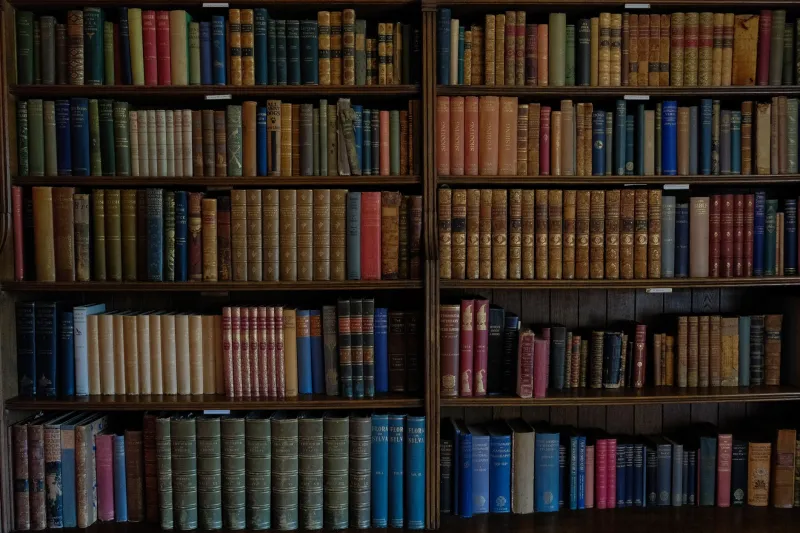
The work of assessing an archive of this complexity is rarely straightforward. When our specialists first entered the collector's library — a double-height room in a Georgian townhouse, its shelves running floor to ceiling on three walls — the initial impression was one of considered organisation. Books were arranged thematically and chronologically, with careful handwritten notes tucked into many volumes recording provenance details, purchase prices, and the collector's own annotations regarding significance.
Yet even within a well-ordered collection, surprises await. Among the most striking discoveries during the appraisal process was a presentation copy of a celebrated modernist novel, inscribed not to a well-documented recipient but to an individual whose connection to the Bloomsbury circle had previously been considered peripheral. Cross-referencing with correspondence held at two university archives confirmed the association, transforming what might have appeared a modestly interesting inscription into a document of genuine biographical importance. Such discoveries are not uncommon in collections of this depth, but they remain genuinely thrilling for the specialists involved — and, more pertinently, they carry real market consequences.
Other notable findings included a group of working typescripts with authorial corrections, several volumes with bookplates from earlier distinguished owners, and a run of little magazines from the 1920s and 1930s in condition rarely encountered at auction. Each of these elements required individual assessment, with condition reports, comparative sales data, and specialist consultation all informing the reserve prices that will be set.
How Landmark Sales Reset Market Benchmarks
The significance of a sale such as this extends well beyond the individual lots on offer. When a collection of genuine depth and coherence reaches the market, it invariably recalibrates expectations across the entire field. Dealers, private collectors, and institutions will study the results closely, using them to revise their understanding of where values now sit for comparable material.
This is particularly consequential for Bloomsbury-era material, a segment of the rare book market that has demonstrated consistent resilience over the past decade. The appearance of fresh, well-documented items from a private source — items that have not circulated within the trade for many years — tends to stimulate broader interest and, in competitive bidding situations, can produce results that surprise even experienced observers. We have seen this pattern repeat itself with sufficient regularity to regard it as a reliable feature of the market rather than an anomaly.
For collectors currently holding similar material, such results provide a useful and timely measure of their holdings' current worth. For those looking to enter the field, the dispersal of a collection like this represents an opportunity to acquire pieces with impeccable provenance and documented history — factors that will themselves contribute to the long-term value of any purchase.
The Question of Provenance and Its Enduring Value
One aspect of this sale that deserves particular attention is the weight that provenance carries in the current market. A book from a distinguished private library — especially one where the collector was known for rigorous standards and careful documentation — commands a premium that reflects more than mere sentiment. Provenance provides a chain of custody that supports authenticity, reduces risk, and connects the present owner to a history of serious engagement with the material.
In practical terms, this means that buyers at this sale are not simply acquiring books. They are acquiring objects whose histories have been researched, verified, and articulated — a form of intellectual due diligence that has already been performed on their behalf. For institutional buyers in particular, this is a meaningful consideration, given the scrutiny that acquisitions now routinely face.
What This Sale Signals for the Broader Market
The dispersal of a major private archive is always, in some sense, a moment of cultural reckoning. Books that have been held in one place, consulted by one mind, and arranged according to one vision of literary history are about to be scattered — to libraries, to other private collectors, perhaps to archives where they will serve future scholars. There is a bittersweet quality to this process that even the most commercially minded participants acknowledge.
Yet there is also something genuinely affirmative in it. Collections of this quality do not diminish when they disperse; they multiply in influence. The items that find their way into institutional hands become available to researchers. Those acquired by private collectors enter new contexts of care and appreciation. The market itself is enriched by the circulation of material that might otherwise have remained unseen for another generation.
For Bloomsbury Book Auctions, facilitating a sale of this nature represents precisely the kind of work that defines our purpose: connecting objects of genuine significance with the buyers best placed to value and preserve them. We look forward to presenting full catalogue details in the coming weeks, and we encourage serious collectors and institutions to register their interest at the earliest opportunity. Sales of this calibre do not present themselves often, and the window for careful preparation is always shorter than one might wish.