The Mark of a Mind: Why Annotated Copies Are Rewriting the Rules of Rare Book Valuation
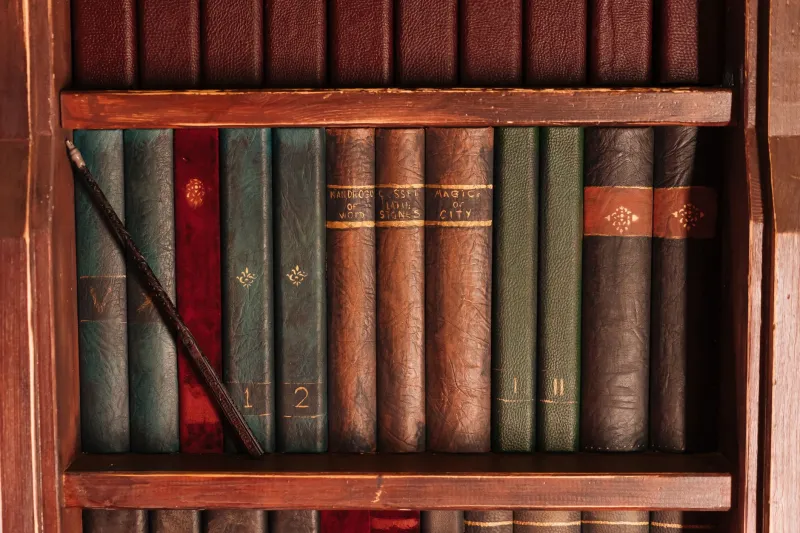
For the better part of two centuries, the ideal rare book was one that appeared scarcely touched. Collectors prized the unbroken spine, the uncut page edges, the absence of any human interference between the printer's press and the present day. Condition grading systems were built upon this premise. Auction catalogues celebrated the word 'fine' as though it were a moral designation. A pencil mark in the margin was, in conventional wisdom, a wound.
That orthodoxy is now under considerable pressure.
Across the British rare book market, a measurable and sustained shift in collector behaviour has emerged over the past decade — one that places annotated, marked-up, and heavily inscribed copies of significant works above their pristine equivalents in both desirability and hammer price. The phenomenon is not universal, and it is not without nuance. But for those tracking auction results with care, the evidence is increasingly difficult to dismiss.
Condition Versus Conversation
The traditional hierarchy of rare book valuation rested on a straightforward logic: the closer a copy was to its original published state, the more faithfully it represented the author's work, and therefore the more it was worth. This reasoning served the market well for decades, producing a reliable grammar of value that dealers, cataloguers, and collectors could share.
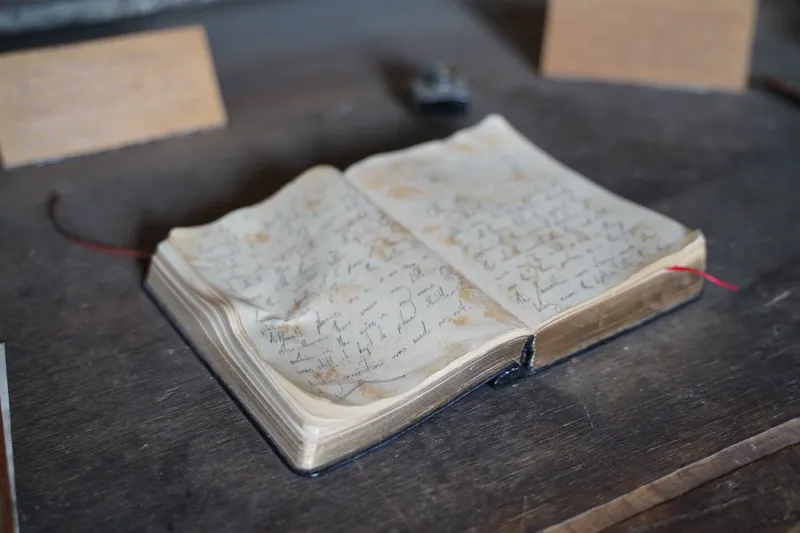
What this framework failed to account for was the possibility that a book's life after publication might itself become a form of value. A copy read closely by a significant figure — annotated, questioned, argued with in the margins — is no longer merely a physical object produced in a print run. It becomes a document of intellectual history. The annotations are primary evidence. The marginal notes are, in their own right, a form of authorship.
This is the insight now driving premiums at auction. When a copy carries the handwriting of someone whose mind mattered — a poet, a philosopher, a scientist, a statesman — the book ceases to be defined solely by its printing and becomes defined equally by its reading.
Case Studies in Transformed Value
The British auction record offers instructive examples of this revaluation in action.
Consider the category of Victorian scientific literature. A first edition of a foundational natural history or geological text, in fine, unmarked condition, will attract a predictable range of bidders. The same edition, bearing dense annotations in the hand of a contemporary fellow of a learned society — cross-referencing competing theories, disputing specific passages, noting correspondence with the author — can exceed that estimate by a factor that defies conventional condition-based modelling. The marginalia become the lot.
Similarly, literary first editions annotated by subsequent writers of renown have repeatedly surprised the market. A copy of a Victorian novel bearing the reading notes of a later modernist, or a Georgian poet's marked-up edition of a Romantic predecessor, presents bidders not with one literary intelligence but two in dialogue across time. The appeal to serious collectors is self-evident: they are acquiring not merely a book but a record of literary influence in its most intimate form.
In one notable case examined by specialists in this field, a mid-Victorian first edition — unremarkable in its physical condition and of modest value in any clean copy — was transformed by the discovery of extensive annotations attributable, through handwriting comparison and archival corroboration, to a prominent member of a well-documented intellectual circle. The hammer price bore no resemblance to any estimate grounded in condition alone.
The Cataloguer's New Responsibility
This shift places fresh demands on the professionals who prepare auction descriptions. The traditional cataloguer's art involved close physical examination: collation of gatherings, identification of issue points, assessment of binding integrity and paper quality. These skills remain essential. But the annotated copy requires an additional layer of scholarly investigation that not every catalogue department is equally equipped to provide.
Handwriting identification, archival cross-referencing, provenance chain construction — these are disciplines that sit at the intersection of bibliography, literary history, and archival science. When a cataloguer encounters a heavily marked copy, the question is no longer simply 'what condition is this book in?' but 'whose mind left these traces, and what does their presence mean for the intellectual history of this text?'
The answer to that second question can be worth considerably more than any condition upgrade.
For buyers, this creates both opportunity and risk. A copy dismissed by an under-informed cataloguer as 'heavily annotated throughout' may, on closer examination, carry marginalia of extraordinary historical significance. Equally, annotations that appear exciting at first glance may prove, on expert scrutiny, to be the work of an enthusiastic but inconsequential Victorian reader. The premium commanded by annotated copies is real, but it is contingent on the quality of the scholarly case that can be made for the annotator's identity and significance.
Why Now?
It is worth asking why this revaluation is occurring at this particular moment in the market's development.
Several factors appear to be converging. The digitisation of archival materials — letters, diaries, institutional records — has made handwriting identification significantly more accessible to both specialists and serious amateur collectors. Where once the attribution of a hand required a physical journey to a reading room and the assistance of a specialist archivist, it is now frequently possible to conduct preliminary comparison against digitised exemplars from the comfort of one's own library.
Simultaneously, the broader cultural appetite for provenance — for the story behind the object — has intensified across all collecting categories. In the rare book market specifically, this appetite is being met by annotated copies in a way that no pristine first edition, however fine, can replicate. A clean copy is, by definition, mute about its own history. An annotated copy speaks.
There is also a generational dimension. Collectors who came to the market in the digital era are, perhaps predictably, less invested in the physical ideal of the unread book. For these buyers, the marks of reading are not damage but data — evidence of the book's engagement with human thought over time.
Implications for the Serious Collector
For those building collections with an eye on both cultural significance and long-term value, the annotated copy presents a compelling case for reconsideration. The collector who reflexively passes over a marked-up copy in favour of a cleaner example may be applying a valuation logic that the broader market is quietly abandoning.
This does not mean that condition has become irrelevant. For many categories of collecting — finely printed books, illustrated works, binding-focused collections — the physical state of the object remains the primary determinant of value. The shift towards annotated copies is concentrated in areas where intellectual provenance can be demonstrated and where the identity of the annotator carries genuine historical weight.
What has changed is the ceiling. A fine, clean copy will achieve its fine, clean price. An annotated copy, properly attributed and contextualised, has no reliable ceiling at all.
The rare book market has always rewarded those who look more carefully than their competitors. In the age of the annotated copy, that principle has never been more richly illustrated.