Aristocratic Libraries Unlocked: How Country House Clearances Are Transforming Britain's Rare Book Trade
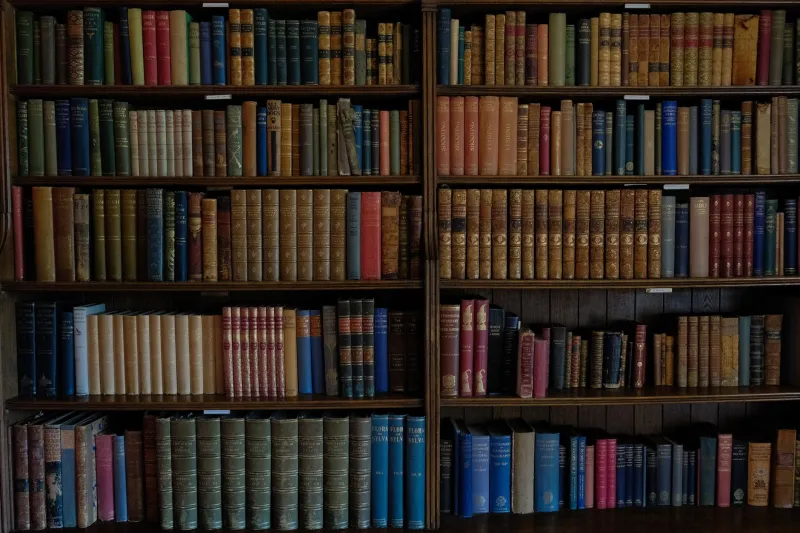
For centuries, the great libraries of Britain's country houses functioned as private repositories of intellectual and cultural heritage — rooms lined floor to ceiling with volumes accumulated across generations, visited by few and catalogued by fewer. Today, a combination of inheritance tax pressures, estate maintenance costs, and shifting attitudes towards ancestral property is opening those doors at an unprecedented rate. The result is a sustained influx of rare and historically significant books into the open market, fundamentally altering the landscape of the UK rare book trade.
The Estate Clearance Phenomenon
The pattern has become familiar to those working within the auction and valuation sector. An estate passes to a new generation; the costs of upkeep prove prohibitive; and the decision is made to liquidate assets, often including a library that has not been meaningfully assessed since the Victorian era. What follows can be remarkable. Books acquired as working texts by Georgian politicians, annotated by Victorian scholars, or gifted between literary luminaries with personal inscriptions surface for the first time in the commercial sphere.
According to valuers operating across the English shires and Scottish estates, the volume of such clearances has increased noticeably over the past decade. Factors including the freezing of inheritance tax thresholds, rising energy costs for maintaining large properties, and the practical challenges of managing multiple-wing houses have all contributed. The pandemic period, which prompted many families to reassess their relationship with inherited property, appears to have accelerated a process already well underway.
What distinguishes these discoveries from standard auction consignments is provenance. A first edition acquired at publication is one thing; a first edition bearing the bookplate of a noted historical figure, or inscribed by the author to a personal acquaintance, occupies an entirely different category of desirability.
What the Valuers Are Finding
Professional book valuers engaged in estate clearance work describe the experience in terms that oscillate between methodical diligence and genuine surprise. The process typically involves working through rooms systematically, assessing each volume individually — a time-consuming exercise when a library may contain several thousand titles.
The most significant discoveries tend to share certain characteristics. Age alone is rarely the determining factor; condition, association, and edition status carry considerable weight. A seventeenth-century pamphlet in poor condition may be outbid at auction by a mid-twentieth-century first edition in fine dust jacket, depending on the author and the market moment. What estate clearances consistently produce, however, is the element of association — books that have lived within a specific historical context, connected to identifiable individuals and documented through correspondence, portraits, or household records.
Signed copies present a particular area of interest. Where a signature can be authenticated and the recipient identified as someone of historical significance, premiums can be substantial. The intersection of literary history and social history that country house libraries so often represent makes them fertile ground for precisely these combinations.
Democratising Access to Significant Collections
Perhaps the most consequential aspect of the estate clearance trend is its effect on access. For generations, volumes held within private aristocratic collections were effectively invisible to the wider scholarly and collecting community. Researchers might know of their existence through historical records, but physical examination — let alone acquisition — was rarely possible.
The entry of these books into the auction market changes that equation entirely. A collector in Edinburgh or a scholar in Bristol may now compete for a volume that spent three centuries in a Wiltshire drawing room. This democratisation of access has been broadly welcomed within the bibliophile community, even as it generates occasional debate about the dispersal of historically cohesive collections.
Auction platforms such as Bloomsbury Book Auctions occupy a pivotal position in this process. By providing specialist expertise in cataloguing and attribution, alongside transparent bidding accessible to registered participants across the country, they serve as the conduit through which private heritage becomes public market. The responsibility of accurate description and contextual information is considerable, and the standards applied to estate consignments reflect that.
The Effect on Price Predictions and Valuations
The sustained arrival of country house material is producing measurable effects on market valuations, though the picture is nuanced. In certain categories — seventeenth and eighteenth-century English literature, early scientific texts, and books with notable aristocratic provenance — increased supply has not suppressed prices in the manner a classical economic model might predict. Demand from both private collectors and institutional buyers has grown in parallel, sustaining robust bidding.
Where the market has adjusted is in the recalibration of expectations for previously unknown or unrecorded copies. The discovery of a variant edition, or a copy with manuscript annotations, within an estate library can prompt immediate revaluation of related material across the market. Dealers and specialist auction houses monitor estate sales closely for precisely this reason.
First editions of canonical British authors — from the Romantics through to the mid-twentieth century — have shown particular resilience. When a clean copy of a significant first edition emerges from a documented private collection, it carries a narrative that appeals to collectors as much as the text itself. The story of the book — where it has been, who has held it — becomes inseparable from its value.
Looking Ahead
The conditions driving estate clearances show little sign of abating. With inheritance tax reform a persistent subject of political discussion rather than imminent resolution, and with the costs of maintaining historic properties continuing to rise, the flow of country house library material into the open market is likely to continue for the foreseeable future.
For collectors, this represents an extended period of genuine opportunity. Books that have not appeared at auction within living memory will continue to emerge, carrying with them the documentary weight of their provenance and the condition benefits that often accompany careful long-term storage. For the rare book market as a whole, the phenomenon represents both a challenge — in ensuring rigorous attribution and honest cataloguing — and a moment of unusual vitality.
At Bloomsbury Book Auctions, we approach each estate consignment with the care and specialist knowledge that these collections deserve. Whether you are an executor seeking guidance on a library's contents, or a collector alert to the possibilities these clearances present, we invite you to explore what the opening of Britain's great private libraries means for your own relationship with rare books.