Hidden in Plain Sight: The Collector's Guide to Unearthing Valuable First Editions at Charity Shops and Car Boot Sales
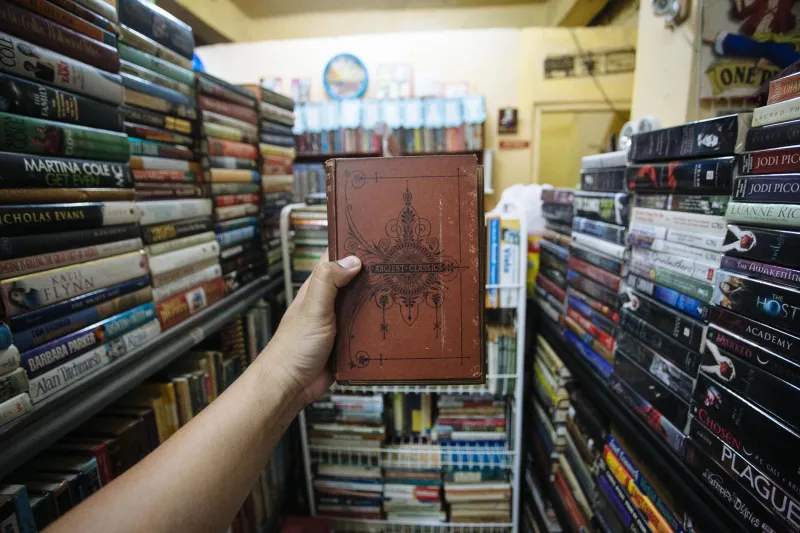
There is a particular pleasure known to experienced book collectors that casual readers rarely encounter: the moment of recognition when a significant volume reveals itself from amongst a jumble of paperback thrillers and outdated travel guides. It happens in Oxfam shops in market towns, on trestle tables at Sunday car boot sales in school car parks, and in the cardboard boxes of local estate clearance firms. Britain's secondary book market is vast, largely unspecialised, and — for those who know what to look for — genuinely rewarding.
This guide is intended as a practical companion for UK book enthusiasts at every level of experience. Whether you have been collecting for decades or are approaching the subject for the first time, understanding what to look for, and why certain characteristics confer value, is the essential foundation.
Why Valuable Books End Up in Charity Shops
Before addressing the mechanics of identification, it is worth understanding how significant books arrive in these settings. The most common route is the house clearance. When a property is cleared following a bereavement or a move into care, books are frequently donated in bulk to the nearest charity shop. The volunteers sorting donations work at considerable speed and without specialist knowledge; a first edition indistinguishable in appearance from a later reprint will often be priced identically.
Other routes include the clearance of personal collections by individuals unaware of the value of specific titles, donations from professionals such as academics and solicitors whose working libraries are dispersed upon retirement, and — occasionally — the deliberate or inadvertent inclusion of significant items within larger donations. Whatever the route, the result is the same: books of genuine rarity and monetary value sitting on open shelves, priced by well-intentioned generalists.
The First Edition: Understanding What You Are Looking For
The term 'first edition' is frequently misunderstood. In the strictest sense, it refers to the first time a text was set in type and printed — the original print run. Within that first edition, collectors further distinguish between the first printing and subsequent printings, which may correct errors or adjust the text. For most collecting purposes, the first printing of the first edition — often called the 'true first' — is what commands a premium.
Identifying a first edition requires familiarity with publisher conventions, which have varied considerably across history. From roughly the 1930s onwards, many British publishers began including a 'number line' on the copyright page — a sequence of digits (such as 10 9 8 7 6 5 4 3 2 1) in which the lowest number present indicates the printing. A line ending in '1' denotes a first printing. Earlier books require different approaches: checking whether the copyright page states 'First published in [year]' without subsequent edition notices, consulting bibliographic references for known points of issue, or examining physical characteristics such as binding variants.
The dust jacket, for twentieth-century books, is frequently as significant as the book itself. An unclipped jacket — one from which the price has not been removed — in good condition can multiply a book's value considerably. Collectors should train themselves to notice jacket condition as a matter of habit.
Key Indicators to Examine in the Field
When browsing in a charity shop or at a car boot sale, time is usually limited and conditions are rarely ideal. A systematic approach helps.
Check the copyright page first. Look for edition statements, number lines, and publication dates. Cross-reference the stated year against your knowledge of when the title was first published.
Examine the binding. Original cloth bindings in good condition are preferable to later rebinds. Look for the publisher's name on the spine and base board.
Assess the dust jacket carefully. Even a jacket in imperfect condition adds value. Examine it for price clipping, tears, fading, and completeness.
Look for inscriptions and signatures. A signature on the title page, particularly if dated and verifiable, can substantially increase value. Inscriptions to named individuals are also of interest, especially if the recipient was of some distinction.
Note the condition honestly. Foxing, water damage, missing pages, and previous ownership stamps all affect value. A fine copy commands a premium; a damaged copy of the same edition may be worth a fraction of that figure.
Titles and Authors Worth Knowing
Certain categories of book repay particular attention in the British secondary market. Mid-twentieth-century British fiction in first edition — Graham Greene, Evelyn Waugh, Muriel Spark, Kingsley Amis — appears with some regularity in charity shops, often without recognition of its significance. Early Ian Fleming novels are perpetually sought, as are first editions of John le Carré, P.D. James, and Ruth Rendell.
Children's literature represents another rewarding area. First editions of Roald Dahl, particularly the earlier titles with original dust jackets, command strong prices. Arthur Ransome's Swallows and Amazons series in early editions is consistently desirable. Less obviously, first editions of now-obscure mid-century children's authors occasionally surface with surprising value, particularly when illustrated by notable artists.
Non-fiction categories including natural history, early travel, and privately printed local history can yield significant discoveries. A Victorian natural history monograph in original boards, or a privately printed account of a specific locality from the Edwardian period, may attract specialist interest well in excess of its charity shop price.
Real Finds: What Has Been Discovered
The anecdotal record of significant charity shop finds is extensive, if difficult to verify in every instance. A first edition of a canonical twentieth-century novel purchased for fifty pence and later sold at specialist auction for several hundred pounds is not an unusual story among experienced collectors. First editions of crime fiction by Golden Age authors — Agatha Christie, Dorothy L. Sayers, John Dickson Carr — have been found in Oxfam shops in university towns, where academic donors are more likely to have assembled significant personal libraries.
Perhaps more instructive than the exceptional finds are the consistent patterns. Certain charity shops, particularly those in affluent market towns, cathedral cities, and university communities, receive better-quality donations than average. Regular visits to these locations, combined with the knowledge to identify significant items quickly, represent a systematic rather than merely fortunate approach to the secondary market.
What to Do When You Find Something Significant
If you believe you have identified a potentially valuable volume, the appropriate next steps depend on your intentions. If you wish to research the item further before any decision, bibliographic databases, specialist dealer catalogues, and auction records are all accessible online. Comparing your copy's specific characteristics against recorded copies of the same edition will help establish whether it represents a true first and assess its relative condition.
For those wishing to realise the value of an unexpected discovery, a specialist auction platform offers the most transparent route to achieving a fair market price. At Bloomsbury Book Auctions, we welcome enquiries from individuals who have come across potentially significant volumes through any means. Our specialist team can provide preliminary assessments and guide consignors through the process of bringing a book to auction, where competitive bidding amongst an informed audience of collectors and dealers is most likely to reflect genuine value.
The books are out there. The knowledge to find them is acquirable. And when you do find something worth celebrating, we are here to ensure it finds its proper home — and its proper price.