Geography as Currency: How Bloomsbury's Postcode Inflates Rare Book Prices Beyond Literary Pedigree
In the world of London property, estate agents have long understood that an address is never merely an address. A flat in Bloomsbury commands a different conversation — and a different price — than one of ostensibly identical specification a quarter of a mile east. The language deployed is familiar: heritage, cultural significance, intellectual legacy. It is, perhaps, no coincidence that the vocabulary of the auction room has begun to sound strikingly similar.
At Bloomsbury Book Auctions, we have observed with considerable interest the emergence of what might be termed a geographic premium — a measurable uplift in hammer prices for rare books whose physical history intersects with Bloomsbury the place, rather than merely Bloomsbury the literary movement. The distinction matters, and it is one that the market is only beginning to interrogate seriously.
The Difference Between a Name and a Neighbourhood
The Bloomsbury Group — Virginia Woolf, Lytton Strachey, E.M. Forster, Roger Fry, and their formidable circle — has long exerted an outsized influence on auction results. That much is well-documented. But a subtler, broader phenomenon is now discernible in bidding patterns: books published by presses physically located in Bloomsbury, volumes once shelved in the reading rooms of the British Museum, and first editions whose ownership chains trace back to the neighbourhood's Georgian townhouses are achieving premiums that extend well beyond the Group's intellectual fingerprint.
Consider the role of the British Museum Reading Room, that great circular temple of scholarship on Great Russell Street. Countless volumes passed through its catalogue and its readers' hands. A book annotated by a known habitué of that room — a scholar, a novelist, an editor whose correspondence places them within those walls — carries a provenance that the market has learnt to reward. The geography confers authority. It implies seriousness of purpose, a connection to one of the world's great repositories of human knowledge.
Publishers, Printers, and the WC1 Advantage
Bloomsbury's publishing geography is equally significant. The district has housed an extraordinary concentration of literary and academic publishers across the past two centuries. When a first edition bears an imprint whose offices once occupied a Bloomsbury square or street, informed collectors frequently assign additional weight to that fact during bidding. The press's physical proximity to the British Museum, to University College London, to the Inns of Court, and to the dense network of literary lodging houses that characterised the area in the nineteenth and early twentieth centuries is understood as a mark of a certain editorial seriousness.
This is not irrational sentiment. Publishing houses choose their addresses deliberately, and Bloomsbury's address historically signalled an orientation toward scholarship, literary ambition, and intellectual rigour. A first edition from such a press carries, in miniature, the reputation of its neighbourhood.
How Estate Agents and Auctioneers Speak the Same Language
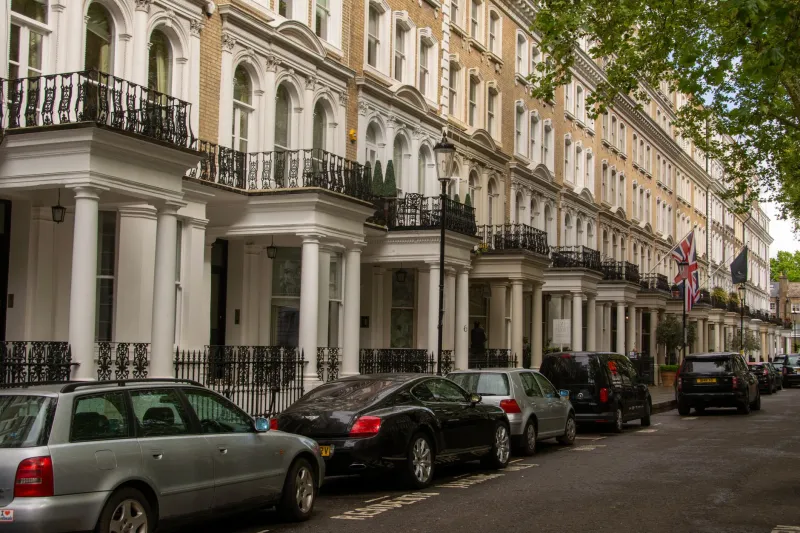
The parallel with property marketing is instructive rather than merely amusing. An estate agent listing a flat on Bedford Square will emphasise its proximity to literary history, its Georgian proportions, its situation within a conservation area of exceptional cultural significance. The language is aspirational and associative; it asks the buyer to purchase not just bricks and mortar but a relationship with a particular idea of London.
Auctioneers, whether consciously or not, employ an equivalent rhetoric. Catalogue entries for Bloomsbury-connected volumes frequently foreground the neighbourhood's associations: a previous owner's address on Tavistock Square, a dedication written from lodgings near Russell Square, a printer's colophon placing production within the district's boundaries. Each detail functions as the bibliophilic equivalent of a period fireplace or original sash windows — a feature that justifies a premium because the market has agreed, collectively, that it should.
The agreement is not arbitrary. Bloomsbury's cultural density is genuine and historically verifiable. The question worth asking is whether that density has begun to generate premiums that outpace the underlying literary or historical significance of individual lots.
Evidence from the Auction Room
Patterns observable across recent British auction results suggest that the geographic premium is real and, in certain categories, substantial. Books with clear Bloomsbury provenance — demonstrated through bookplates, inscriptions, booksellers' tickets, or documented ownership histories — consistently attract competitive bidding that exceeds comparable volumes without such connections. The uplift is most pronounced in the following circumstances:
First editions from Bloomsbury imprints whose offices can be historically verified within the district. Volumes bearing Bloomsbury booksellers' tickets, particularly from establishments that served the scholarly and literary communities surrounding the British Museum. Books with ownership inscriptions placing them in the hands of individuals whose correspondence, diaries, or published memoirs situate them within the neighbourhood. Association copies connected to University College London, the Slade School of Fine Art, or the British Museum's scholarly community.
In each case, the common thread is not the Bloomsbury Group per se, but the broader cultural ecosystem that the neighbourhood sustained across several generations.
The Collector's Calculus
For serious collectors, understanding this premium requires a degree of analytical discipline. The geographic association is a legitimate value driver — but it is not a guarantee of quality, rarity, or long-term appreciation. A volume with a Bloomsbury provenance and genuine literary or historical significance represents a compelling acquisition. A volume whose sole distinction is a tenuous geographic connection to the district demands more scrutiny.
The most astute collectors in this market treat Bloomsbury provenance as one variable among several, rather than as a sufficient condition for investment. They ask whether the geographic connection is documented or merely asserted, whether the book possesses independent merit, and whether the premium being demanded reflects the full picture of the volume's significance or merely the fashionable allure of a postcode.
A Premium With Staying Power
There is every reason to believe that Bloomsbury's geographic premium will persist, and perhaps intensify, as the supply of genuinely documented Bloomsbury-connected volumes contracts. The neighbourhood's physical character is protected by conservation legislation; its literary associations are cemented by decades of scholarship and biography; and its cultural cachet continues to attract international collectors for whom the name carries a weight that transcends local knowledge.
For the rare book market, Bloomsbury is simultaneously a place, an idea, and a brand — and the auction room has proved itself entirely willing to price all three simultaneously. Whether that pricing reflects rational assessment or the particular enchantment that certain London addresses have always exercised over the imagination is, perhaps, a question that the market itself will eventually answer. For now, the gavel falls, and the geography holds its value.