Borders Redrawn, Collections Retained: How Post-Brexit Export Controls Are Quietly Reshaping the Domestic Rare Book Market
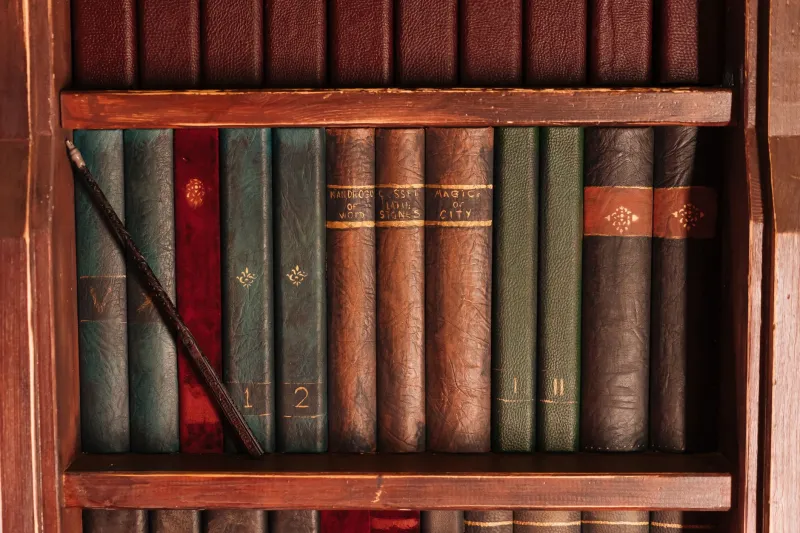
For much of the twentieth century, the passage of rare books out of Britain was a source of considerable cultural anxiety. Manuscripts, illuminated volumes, and landmark first editions departed for American university libraries and overseas private hands with a frequency that prompted periodic outcry from scholars, archivists, and collectors alike. Export licensing existed, but its application was inconsistent and its deterrent effect limited when set against the drawing power of international capital.
Post-Brexit Britain presents a markedly different picture. The regulatory architecture governing the export of culturally significant objects has been consolidated and, in several respects, reinforced. For the rare book market specifically, the consequences have been both practical and profound — reshaping the competitive environment at domestic auction in ways that collectors are only beginning to fully appreciate.
The Regulatory Framework in Brief
Under the Export Control Order 2008 and subsequent amendments, any book or manuscript over a certain age and value threshold requires an export licence before it may leave the United Kingdom. The criteria draw upon recommendations from the Reviewing Committee on the Export of Works of Art and Objects of Cultural Interest, which applies the so-called Waverley Criteria: assessing whether an object is so closely connected with British history and national life that its departure would be a misfortune, whether it is of outstanding aesthetic importance, or whether it is of outstanding significance for the study of a particular branch of art, learning, or history.
While these criteria predate Brexit, the administrative separation from EU single market frameworks has added new layers of procedural complexity for sellers and buyers seeking to move items across borders. What was once a relatively frictionless transaction between, say, a London dealer and a Parisian collector now involves documentation, delays, and the real possibility of a temporary export bar being imposed — during which a domestic institution or collector is afforded the opportunity to match the overseas offer.
It is precisely this mechanism — the temporary export bar — that has begun to generate unexpected acquisition opportunities for British collectors.
Temporary Export Bars: A Window Domestic Buyers Are Learning to Watch
When the Secretary of State for Culture imposes a temporary export bar on a culturally significant object, a matching period is opened. If a UK-based buyer can raise funds equivalent to the agreed export price within the stipulated timeframe, the item remains in Britain. Historically, this mechanism was most visibly exercised by national institutions — the British Library, the Bodleian, the National Library of Scotland — whose acquisition budgets, though perennially stretched, could occasionally be marshalled for items of exceptional national importance.
What has changed in the post-Brexit period is the increasing frequency with which private collectors and specialist dealers are entering these matching periods. Several factors account for this shift. First, the administrative friction associated with exporting items to EU destinations has made overseas buyers marginally less competitive on price, narrowing the gap between what a foreign buyer will pay and what a domestic one can reasonably offer. Second, a growing cohort of British collectors — many of whom built substantial wealth during the technology and finance booms of the past two decades — has developed both the appetite and the resources to compete for items of genuine cultural significance.
The result, observed across the trade over the past three years, is that a number of volumes previously considered almost certain to depart for North American or Continental European collections have instead found their way into domestic hands, sometimes appearing subsequently at auction with strengthened provenance narratives.
Valuation Consequences: What Retention Means for the Auction Room
The retention of significant material within the UK market has produced a discernible effect on auction valuations, though the mechanism is somewhat counterintuitive. One might expect that keeping more supply within a bounded domestic market would moderate prices. In practice, the opposite tendency has been observed.
Items that have been subject to export bar proceedings — and which have ultimately been retained in Britain — arrive at auction carrying an enhanced provenance. The very fact that an overseas buyer considered them worth pursuing at international prices establishes a floor beneath domestic valuations. When such a volume subsequently comes to auction, bidders are not working in an information vacuum; they are aware that the item has been independently assessed as worthy of export-level competition. This creates a psychological premium that experienced auction specialists recognise and that less seasoned bidders can sometimes underestimate.
Furthermore, the consolidation of significant material within the domestic market has intensified competition among British institutional buyers, private collectors, and specialist dealers at auction. Rooms that might once have seen a handful of serious bidders for a landmark item now frequently attract a broader field, with the consequent effect on hammer prices.
Case in Point: The Shifting Geography of Acquisition
Without disclosing the particulars of confidential transactions, it is instructive to note certain patterns that specialists within the trade have observed. Collections assembled during the mid-twentieth century by British academics and literary figures — collections that might in earlier decades have been courted aggressively by American university libraries — are increasingly being acquired by domestic institutions or private British collectors during the estate dispersal phase, before they ever reach the open market.
Where such collections do come to auction, the presence of bidders who are motivated in part by a desire to keep material within the national cultural heritage adds a dimension of competition that goes beyond purely commercial calculation. For a collector bidding against an institution animated by cultural stewardship arguments, the dynamics of the room shift in instructive ways.
Strategic Implications for the Contemporary British Collector
For collectors seeking to navigate this environment intelligently, several observations are worth bearing in mind.
First, monitoring export licence applications and temporary export bar announcements — information made publicly available through the Arts Council England and the Department for Culture, Media and Sport — provides advance intelligence about material that may subsequently enter the domestic market. Items that have passed through the export bar process and been retained domestically often carry a documented valuation that informs subsequent auction estimates.
Second, the regulatory environment rewards collectors who are prepared to act with both speed and certainty. Matching periods under temporary export bars operate to fixed deadlines; the collector who can demonstrate financial readiness without prolonged negotiation is better positioned than one who requires extended due diligence.
Third, and perhaps most significantly, the post-Brexit regulatory landscape has reinforced the importance of building relationships with specialist auction houses that maintain close awareness of the regulatory environment. At Bloomsbury Book Auctions, our specialists monitor the intersection of export licensing requirements and market dynamics as a matter of course, ensuring that clients are positioned to respond to opportunities as they arise.
A Market Transformed, If Not Yet Fully Understood
The broader consequences of the post-Brexit regulatory environment for the rare book market remain, in several respects, still unfolding. The full implications of administrative divergence from EU frameworks, the evolving appetite of domestic institutional buyers, and the behaviour of the new generation of British collectors who have entered the market over the past decade will take further years to become entirely legible.
What can be said with reasonable confidence is that the domestic rare book market is, at present, a more contested and in many ways more rewarding arena than it has been for some considerable time. For collectors with the knowledge, the resources, and the strategic patience to engage with it on its own terms, the regulatory landscape that some initially regarded as an inconvenience has revealed itself as something rather more interesting: a genuine, if inadvertent, mechanism for keeping Britain's literary heritage where many would argue it belongs.