Beyond the Signature: What Seasoned Collectors Know About True Rare Book Value
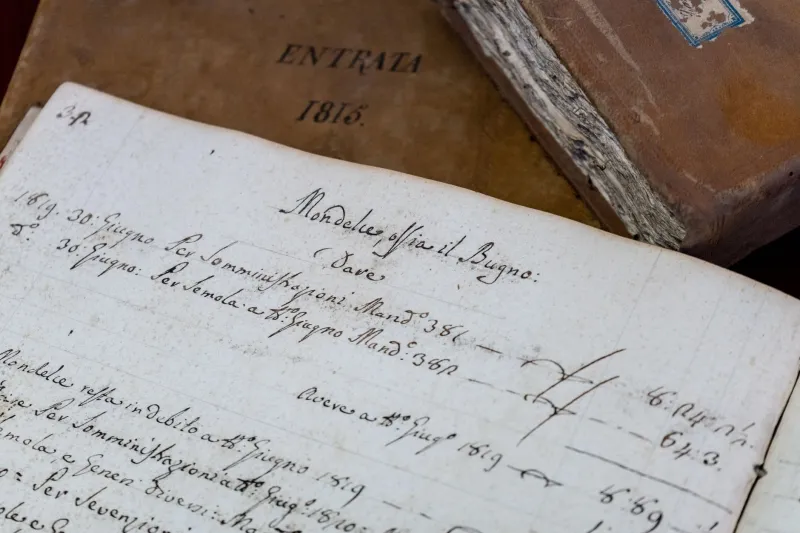
There is a persistent myth in rare book collecting, and it is one that benefits nobody except perhaps the vendors of modestly interesting celebrity-signed volumes. The myth runs approximately as follows: that a famous author's signature, applied to any edition of any book in any condition, confers substantial and reliable value. Walk through the stalls of any major British book fair and you will encounter the consequences of this belief — signed copies of recent bestsellers priced at multiples of their retail value, acquiring a patina of collectability they have not yet earned and may never earn at all.
The truth, as any experienced dealer or institutional buyer will confirm, is considerably more nuanced. Provenance — the documented history of a book's ownership and passage through the world — frequently outweighs authorial signatures in determining genuine market value. Understanding why requires a more careful examination of what the rare book market actually rewards.
What Provenance Actually Means
The word provenance is used loosely in collecting circles, sometimes as a near-synonym for any interesting background detail. In the rare book trade, it carries a more precise meaning: the verifiable chain of ownership that connects a volume from its point of creation to the present day.
Provenance matters for several distinct reasons. It can authenticate a book's origins, ruling out forgery or misattribution. It can establish a direct connection between a significant historical figure and a specific copy, adding layers of meaning that transcend the printed text. And it can place a book within a coherent collection narrative — the library of a Victorian prime minister, the working copies of a celebrated scientist, the annotated texts of a major poet — that makes it desirable to institutions and serious private collectors alike.
A first edition of a moderately significant Victorian novel, unsigned and in good but not exceptional condition, might ordinarily attract a few hundred pounds at auction. The same copy, demonstrably acquired by Thomas Carlyle and bearing his characteristic marginal responses to the text, becomes a different object entirely — one whose value is determined not by the printed words but by the intellectual encounter they prompted in a documented reader.
The Signature Question: When It Matters and When It Does Not
This is not to suggest that authorial signatures are without value. They can be enormously significant — but the circumstances matter enormously.
A presentation copy, inscribed by an author to a specific recipient with a personal message, carries considerably more weight than a signature alone. Better still is an association copy: a book given by one significant figure to another, where the relationship between giver and recipient is itself historically meaningful. A copy of a Bloomsbury Group novel inscribed by Virginia Woolf to T.S. Eliot, for instance, would represent an intersection of two major literary careers and would command a price reflecting that singular conjunction.
By contrast, a signature applied to a modern first edition at a commercial book signing — even by an author of genuine distinction — adds relatively modest value unless the book itself is already scarce or the edition particularly significant. The market distinguishes, with considerable sophistication, between signatures that tell a story and those that merely confirm an author was present at a particular point in time.
Leading UK rare book dealers are consistent on this point. The question they ask of any signed copy is not simply 'who signed it?' but 'why was it signed, to whom, and what does that relationship tell us?' The answers to those questions determine whether a signature transforms a book or merely decorates it.
Condition: The Nuanced Reality
Condition is the other factor most frequently misunderstood by collectors approaching the market for the first time. The broad principle — that better condition commands higher prices — is accurate as far as it goes. A fine copy in its original dust jacket will almost always outperform a reading copy of the same edition.
However, the relationship between condition and value is not linear, and it is complicated by the nature of the book in question. For twentieth-century first editions, where dust jackets are both expected and frequently absent, a jacket in near-fine condition can represent the majority of the total value of the lot. For much earlier material — incunabula, seventeenth-century quartos, eighteenth-century scientific texts — the expectation of pristine condition is simply unrealistic, and the market adjusts accordingly.
More significantly, condition must always be assessed relative to the book's rarity and significance. A unique copy of a pamphlet documenting an early industrial process, even if its pages are browned and its covers detached, may be of greater importance to a research library than any number of immaculate later printings. Completeness — all pages, all plates, all maps present — frequently matters more than surface condition for early illustrated works.
Building a Framework for Genuine Evaluation
For collectors seeking to develop a more rigorous approach to valuation, the following framework offers a useful starting point.
Establish the edition hierarchy first. Before considering any other factor, determine whether you are looking at a first edition, a first issue, a later printing, or a facsimile reproduction. These distinctions are fundamental and non-negotiable in serious collecting.
Research the copy's specific history. Examine bookplates, booksellers' tickets, stamps, inscriptions, and any other evidence of prior ownership. Even partial provenance research can reveal unexpected significance.
Contextualise the signature. If a signature is present, research its circumstances. A dated inscription with a named recipient is worth considerably more investigation than a bare signature on the title page.
Assess condition against appropriate benchmarks. Compare the copy's condition not against an imaginary ideal but against other surviving examples of the same edition. For very early material, survival in any form may itself constitute rarity.
Consider institutional appetite. University libraries, national collections, and subject-specific archives are major buyers in the rare book market. A book with strong scholarly relevance may attract institutional competition that drives prices well beyond private collector estimates.
The Investor's Perspective
For those approaching rare books as a long-term investment rather than a purely personal passion — and the two motivations are by no means mutually exclusive — the primacy of provenance and condition context over celebrity signatures has clear practical implications.
Books with strong, documented provenance connecting them to significant historical figures or events have shown consistent resilience in the market across economic cycles. They are difficult to replicate, impossible to manufacture retrospectively, and their significance tends to grow rather than diminish as historical perspective lengthens. By contrast, signed copies of contemporary works are subject to the considerable uncertainty of literary reputation over time — an author celebrated today may be little read in thirty years, with corresponding effects on the market for their signed material.
At Bloomsbury Book Auctions, we regularly advise both consignors and prospective bidders to look beyond the obvious markers and ask the more demanding questions. The rare book market rewards knowledge and patience in roughly equal measure. Those who invest in understanding what genuinely drives value — rather than what merely appears to drive it — are invariably better positioned to make decisions they will not regret.