From Overlooked to Extraordinary: The Auction Moments That Redefined Rare Book Valuations
There is a particular electricity in the auction room when a lot surpasses its estimate not by ten or twenty per cent, but by a factor of ten, fifty, or even one hundred. In the rare book trade, these moments are not mere curiosities — they are seismic events that reshape how collectors, dealers, and institutions perceive entire categories of literary material. Over the past decade, a remarkable series of such reversals has occurred at major British and international auction houses, each carrying lessons that extend far beyond the individual volume.
At Bloomsbury Book Auctions, we have witnessed this phenomenon first-hand: books that arrive with modest expectations and depart with extraordinary prices, leaving both vendors and underbidders to reflect on what they nearly missed.
The Anatomy of an Undervaluation
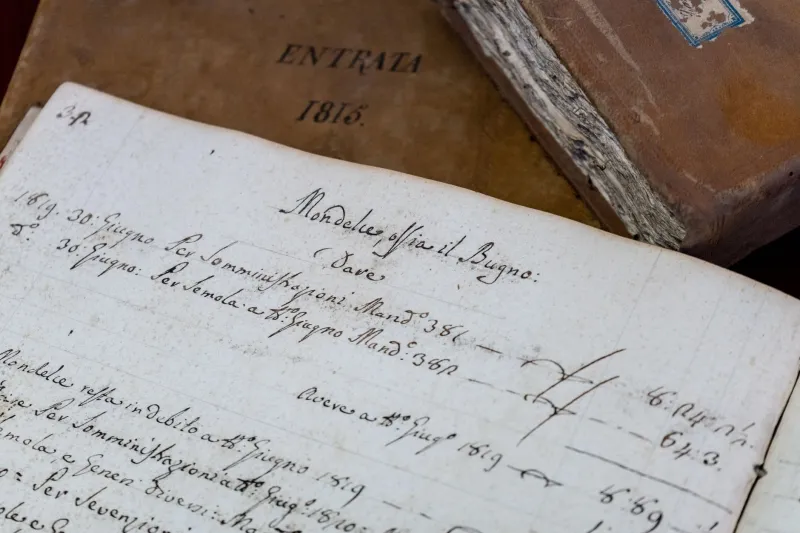
Before exploring specific examples, it is worth understanding why significant books are so frequently undervalued in the first instance. Cataloguing is an imperfect science. Even the most experienced specialist may encounter a volume whose true significance is obscured by a plain binding, a later edition's dust jacket, or simply the accumulated dust of a century in storage. Provenance is not always immediately legible; an inscription on a flyleaf may mean nothing to one appraiser and everything to another who recognises the handwriting.
Market timing also plays a considerable role. A book connected to a particular author or historical period may sit dormant in the market for years, only to surge in relevance when a major biography is published, a film adaptation is released, or a centenary anniversary draws fresh cultural attention.
Case Study: The Country Parson's Copy That Wasn't
Perhaps one of the most instructive examples from the British market in recent years involved a mid-eighteenth-century theological pamphlet, consigned as part of a mixed lot from a Somerset rectory clearance. Catalogued at a conservative estimate of £300–£500, it attracted little pre-sale interest. What the initial assessment failed to identify was a series of marginal annotations in a hand subsequently confirmed, through correspondence held at a Cambridge college archive, to belong to a significant figure in the early Methodist movement.
When a specialist attending the preview recognised the handwriting and alerted the saleroom, the lot was withdrawn and re-catalogued with full provenance documentation. At its eventual sale, bidding opened at £2,000 and closed at just over £38,000 — the annotator's identity having transformed an unremarkable pamphlet into primary historical source material of considerable scholarly importance.
This outcome illustrates a principle that experienced collectors know well: the words printed on the page are only one dimension of a book's value. The hands through which it has passed may matter equally, or more.
When Literary Rediscovery Drives the Market
The academic and popular reassessment of neglected writers has become one of the most potent forces in contemporary rare book pricing. The renewed critical interest in mid-twentieth-century women writers, for instance, has produced dramatic results for first editions that once sold for single-figure sums at provincial house sales.
A notable case involved a signed first edition of a 1950s British novel, long out of print and largely forgotten, which appeared at auction with an estimate of £80–£120. The author had been the subject of a recent reassessment in literary journals, and a small but determined group of collectors had begun actively seeking her early work. Competitive bidding between two institutional buyers and a private collector in Edinburgh drove the final price to £9,400 — a result that prompted immediate reappraisal of related material across the trade.
For collectors, the implication is significant: monitoring academic publishing and literary criticism can offer advance warning of which neglected figures are about to enter the mainstream of serious collecting.
The Role of Condition — and Its Occasional Irrelevance
Conventional wisdom holds that condition is paramount in rare book valuation. For most categories of collectable literature, this remains broadly true. Yet some of the most dramatic auction reversals have involved books in genuinely poor condition — volumes that any dealer might have passed over at a book fair — because their significance transcended the physical state of the object.
A working copy of a Victorian scientific text, heavily annotated and with pages loose at the gutter, might appear unsaleable by ordinary standards. Yet if those annotations can be attributed to a significant figure in the history of science, and if that attribution is properly documented, the copy may outperform a pristine example by a considerable margin. Scholars and institutions are often less concerned with the aesthetic condition of a book than with the intellectual content it carries — particularly when that content exists nowhere else.
What Collectors Should Take From These Reversals
The lessons embedded in these auction stories are not merely entertaining. They constitute a practical framework for anyone building or assessing a collection.
Research provenance exhaustively. Before consigning or purchasing, invest time in understanding where a book has been. Booksellers' tickets, armorial bookplates, presentation inscriptions, and even old price pencillings can be starting points for research that transforms a valuation.
Follow the cultural conversation. Literary anniversaries, major biographies, prize shortlists, and academic reassessments all create demand. Collectors who anticipate these moments rather than react to them are invariably better positioned.
Do not dismiss the unfamiliar. The books that produce the most startling results are rarely the ones that announce their significance immediately. Developing the patience and knowledge to recognise obscured value is the mark of a genuinely skilled collector.
Engage with specialists before the sale. At Bloomsbury Book Auctions, our cataloguing team welcomes early consultation. A conversation before a lot is formally assessed can make the difference between an estimate that reflects true market potential and one that leaves considerable value undiscovered.
The Enduring Appeal of the Unexpected
The rare book market retains a quality that few other collecting fields can match: genuine surprise remains possible. In an era when algorithms and databases have made large segments of the antiques trade highly predictable, books continue to resist complete systematisation. The next volume to produce a ten-fold return on expectation may already be sitting on a shelf somewhere in Britain, waiting to be properly understood.
That possibility — remote but entirely real — is what draws serious collectors to the auction room, and what makes the study of past reversals so much more than an exercise in nostalgia. It is, in the most practical sense, preparation for the future.